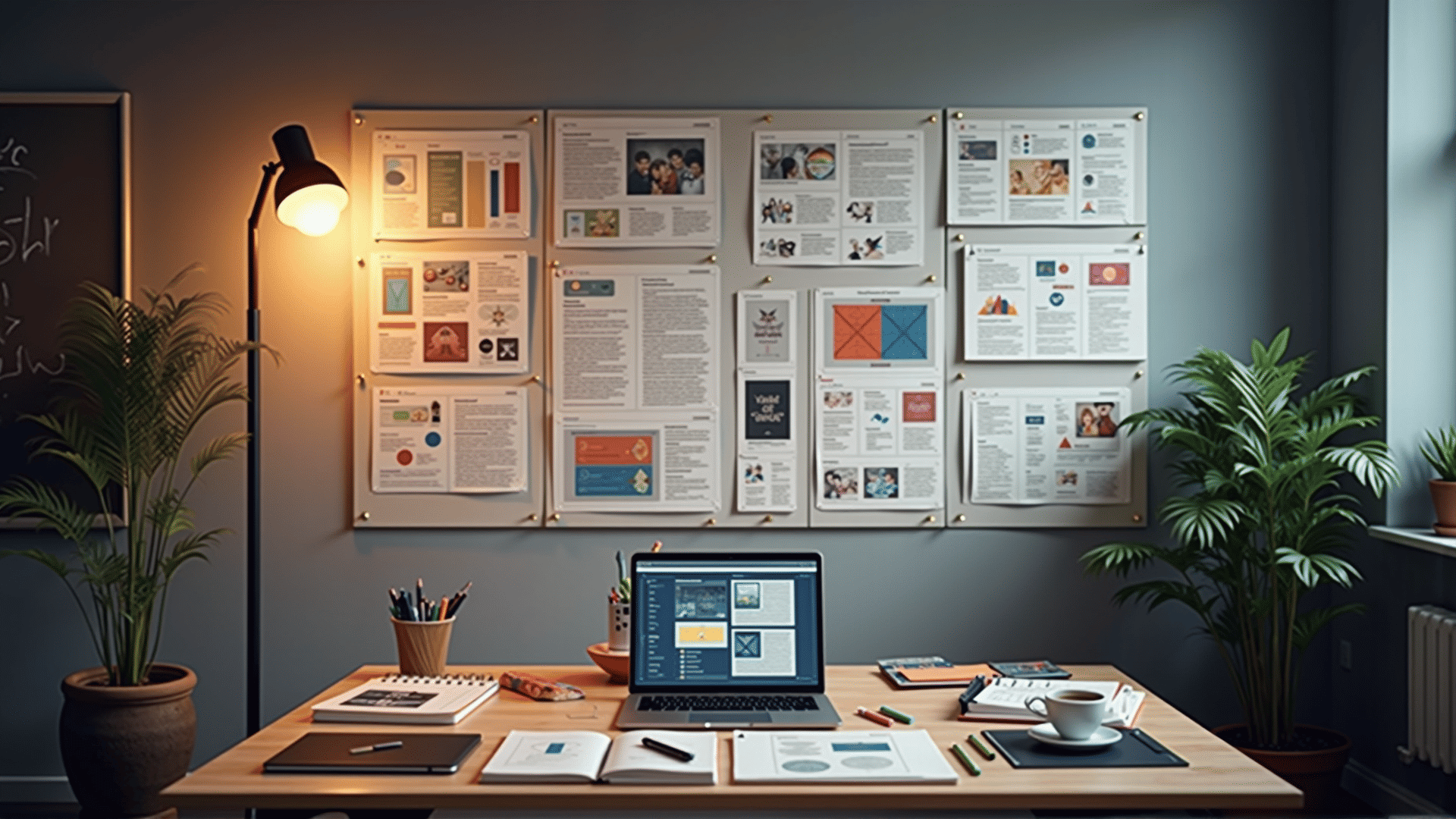
In the realm of visual communication, creating layouts that are both aesthetically pleasing and functional is essential. By utilizing fundamental design principles, designers can craft layouts that not only catch the eye but also enhance user interaction. Key principles such as balance, contrast, and harmony play a vital role in achieving this goal.
Balance is the distribution of visual weight in a design. It's integral for creating layouts that feel stable and harmonious. Designers have the choice between symmetrical balance, where elements are evenly distributed on either side of a central axis, and asymmetrical balance, where various elements differ in size, shape, or color but still achieve a harmonious equilibrium. Symmetrical designs often evoke feelings of formality and elegance, whereas asymmetrical layouts are dynamic and can add interest and movement.
Contrast refers to the juxtaposition of opposing elements, such as light and dark, large and small, or modern and traditional. It's fundamental for drawing attention and creating focal points within a layout. By employing contrast effectively, designers can guide the viewer's eye to the most important elements, ensuring that the message is not only seen but also understood. Contrast can be achieved through color, typography, spacing, and shape, ensuring diverse yet cohesive compositions.
Harmony involves the arrangement of elements to create a sense of unity and cohesion within a layout. When elements are in harmony, they feel as though they belong together, contributing to a seamless overall look. Achieving harmony often involves using repetition and rhythm, repeating certain design elements like colors, shapes, and lines throughout the layout. This repetition creates a pattern that is pleasing to the eye and provides a consistent user experience.
Understanding and implementing these principles can significantly impact the effectiveness of any design. It's important to strike a balance between these elements to ensure that no single principle overwhelms the others. An aesthetically pleasing layout is one where all elements work together to support the content and guide user interaction seamlessly.
To master the art of creating fantastic layouts, designers must practice these principles, adapt them according to specific project needs, and remain open to experimentation. Through thoughtful consideration and a keen eye for detail, designers can elevate their layouts from mere compositions to impactful pieces that captivate and engage their audience.